A verified capture of the real template experience—no simulated interface or pre-rendered 3D substitute.
Premium gallery
The complete visual system.
10 verified previews built from the real template UI and release assets.
Preview / 02
Preview / 03
Preview / 04
Preview / 05
Preview / 06
Preview / 07
Preview / 08
Preview / 09
Preview / 10
The product
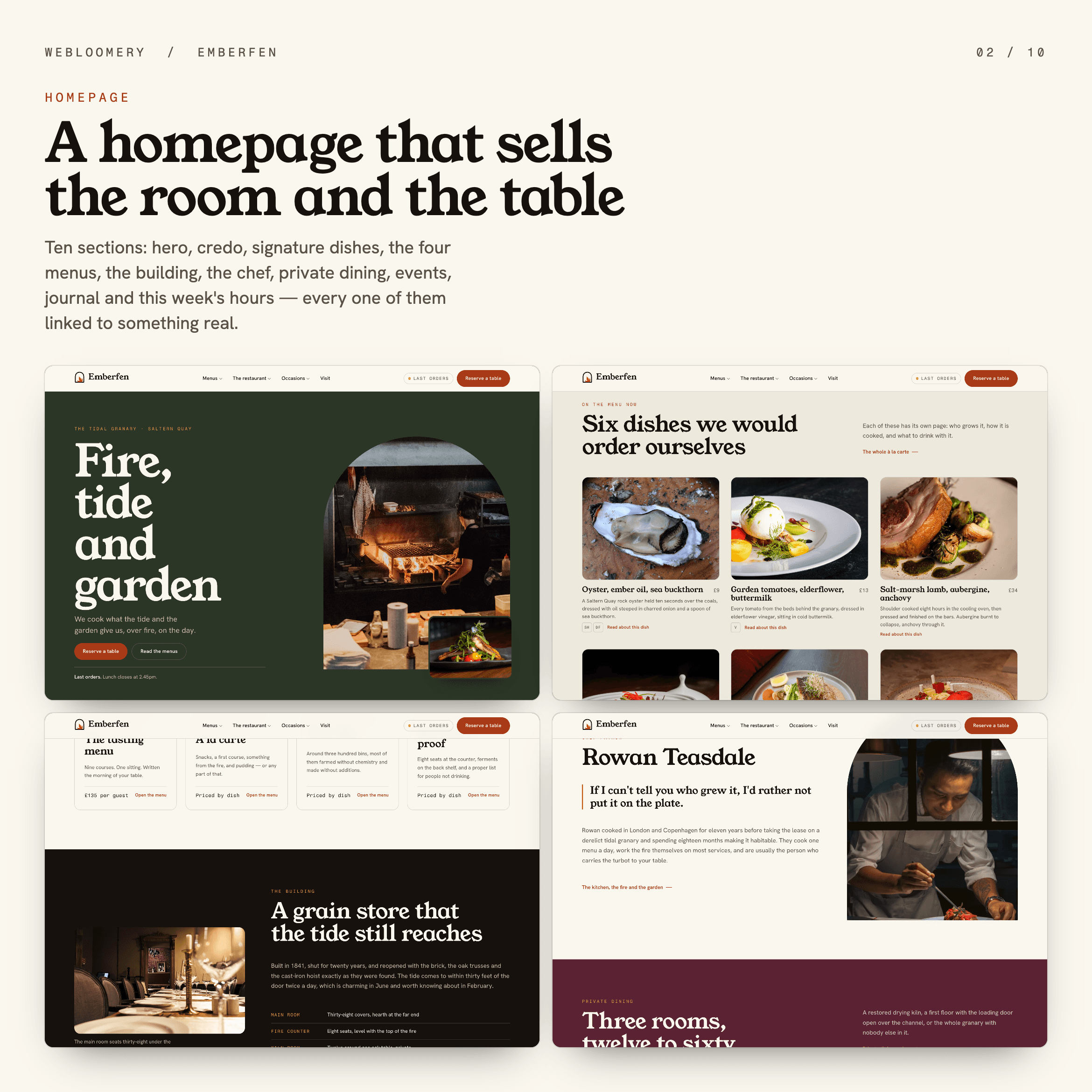
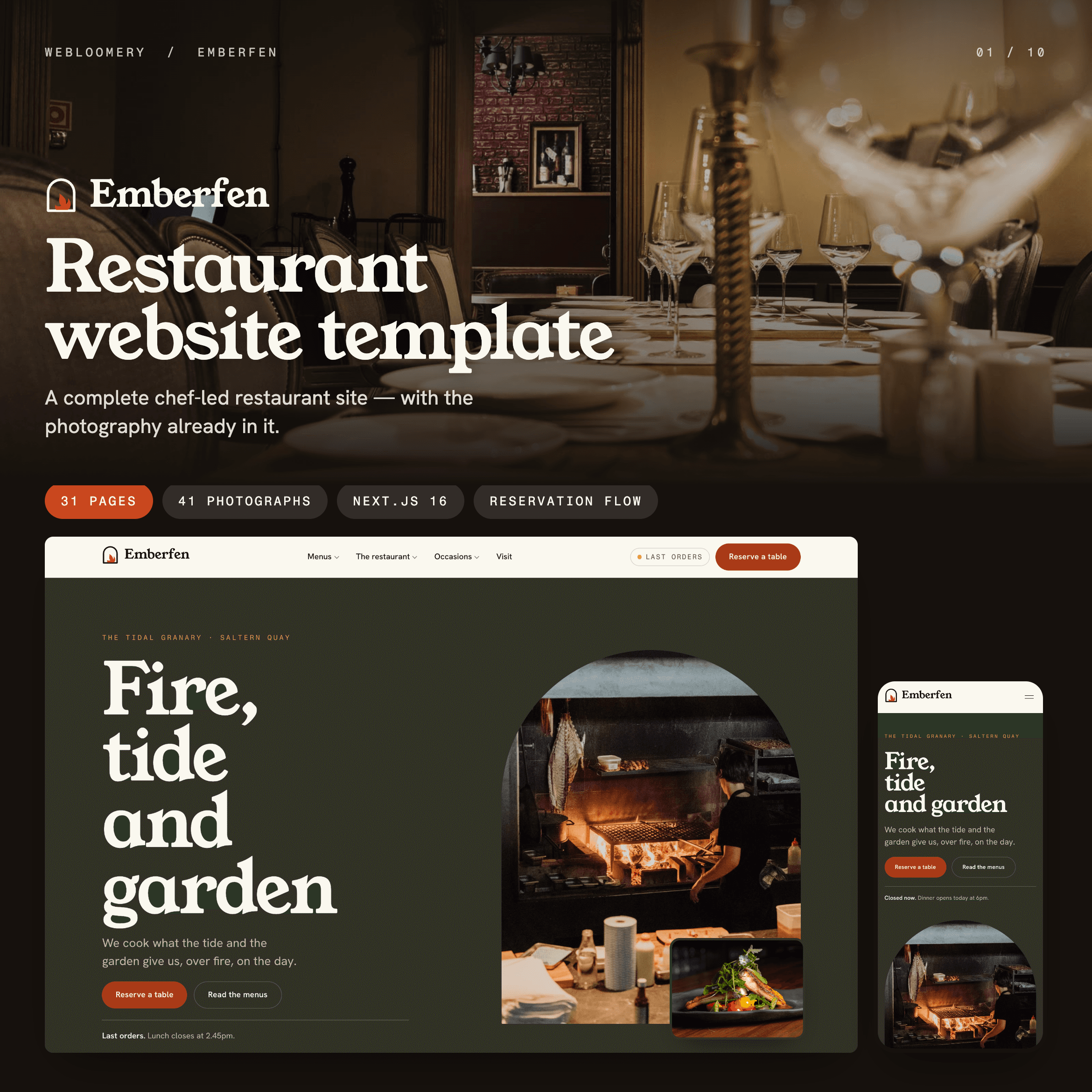
Emberfen is a complete 31-page website template for a chef-led restaurant, built in Next.js 16, React 19 and TypeScript and exported as a fully static site.
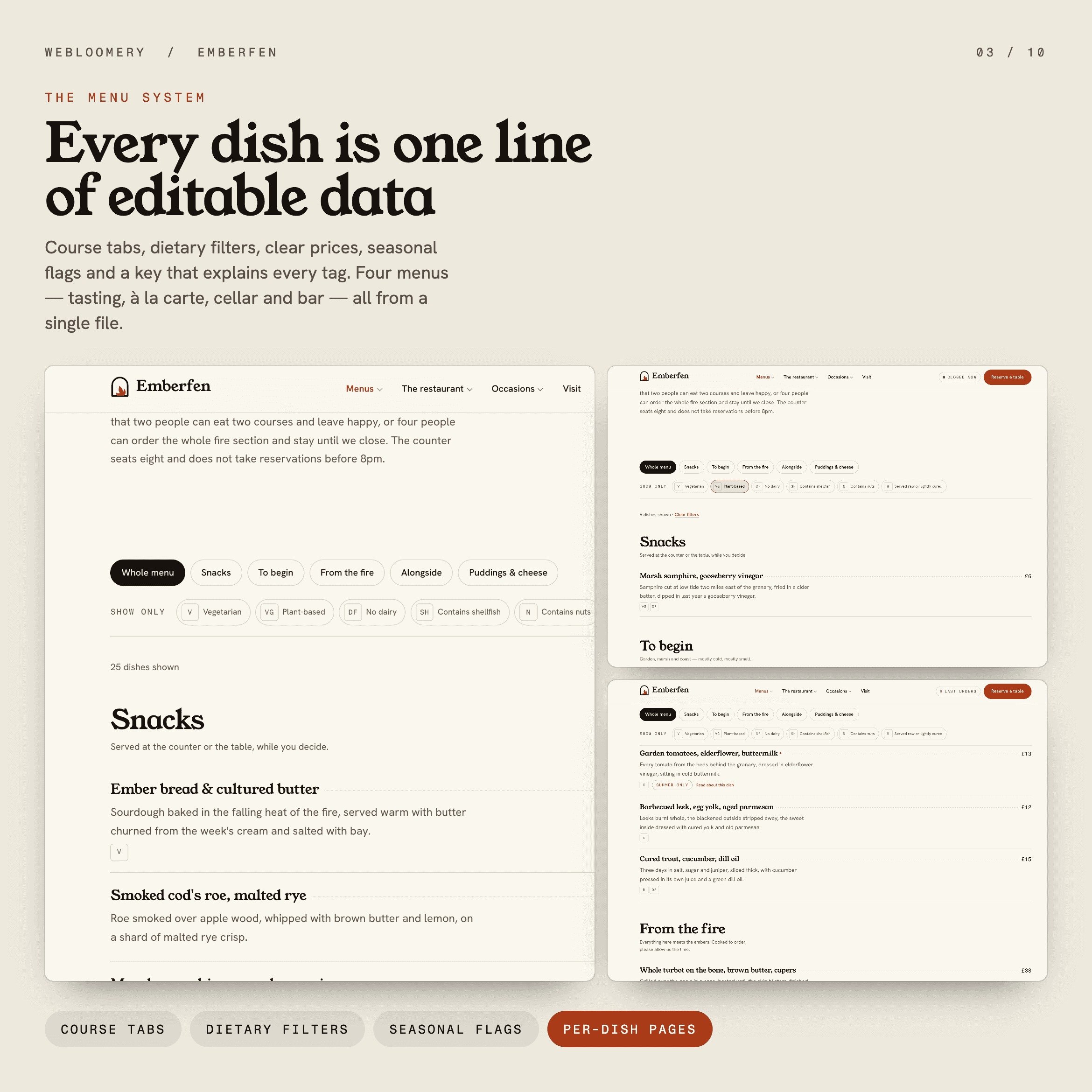
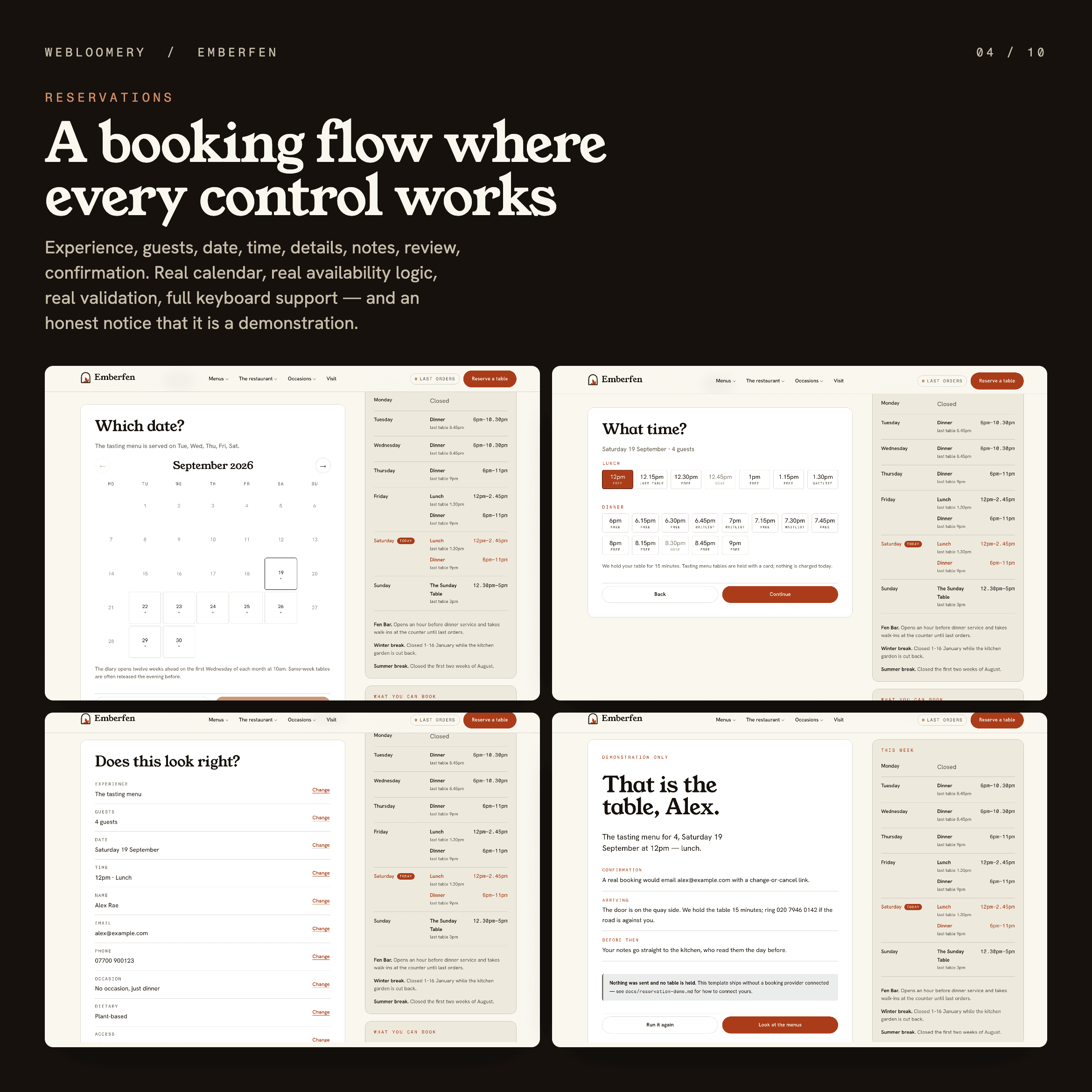
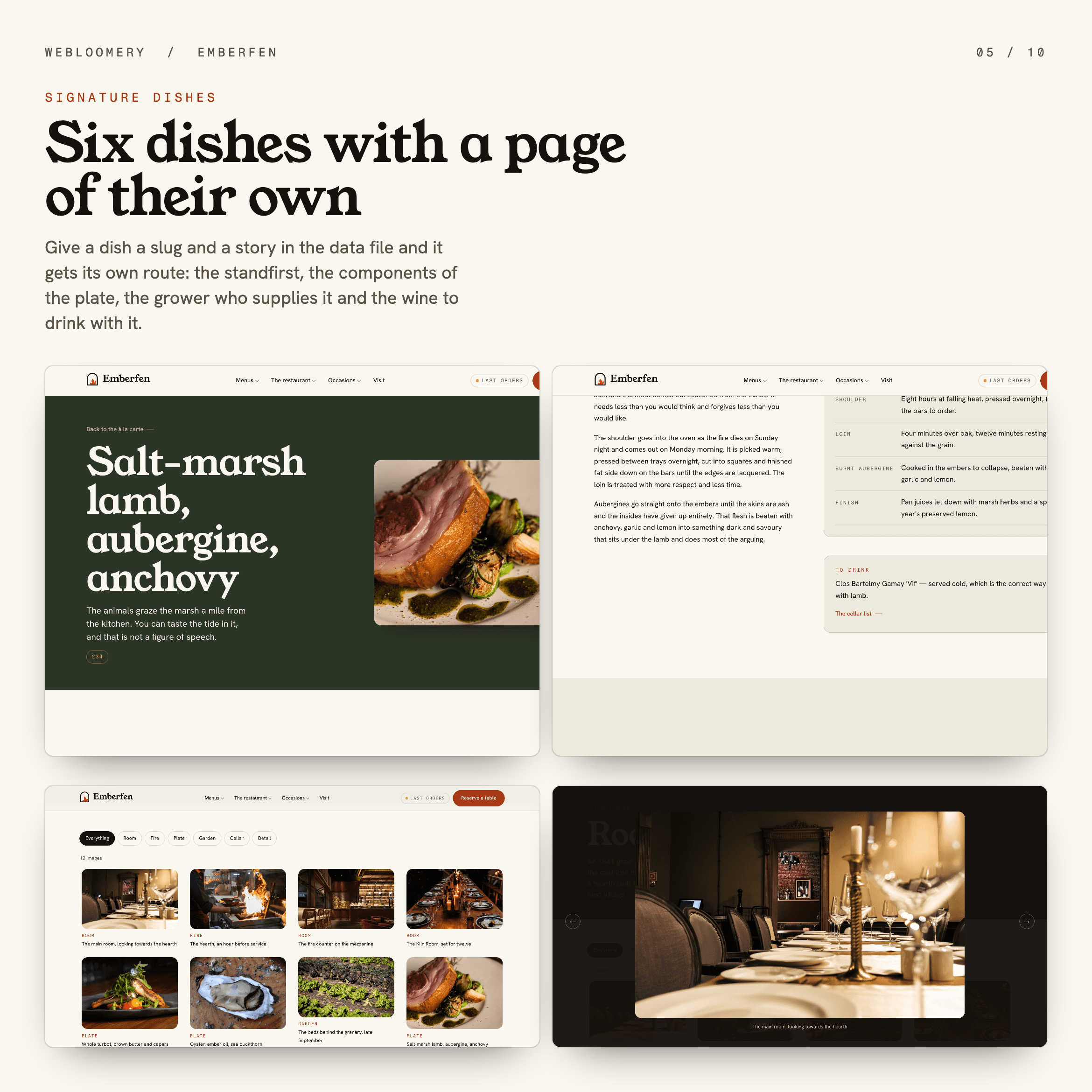
The menu is a real system rather than a picture of one. Every dish is a single editable object carrying its course, price, dietary tags and seasonal flag, and the menu pages, homepage highlights, course tabs, dietary filters and per-dish story pages are all generated from it. The reservation flow is seven working steps — experience, guests, date, time, details, notes and review — with a real calendar, deterministic demo availability derived from the opening hours, inline validation and full keyboard support. One opening-hours schedule drives the header status pill, the footer, the Visit page, the booking diary and the structured data, evaluated in the venue's own timezone rather than the visitor's.
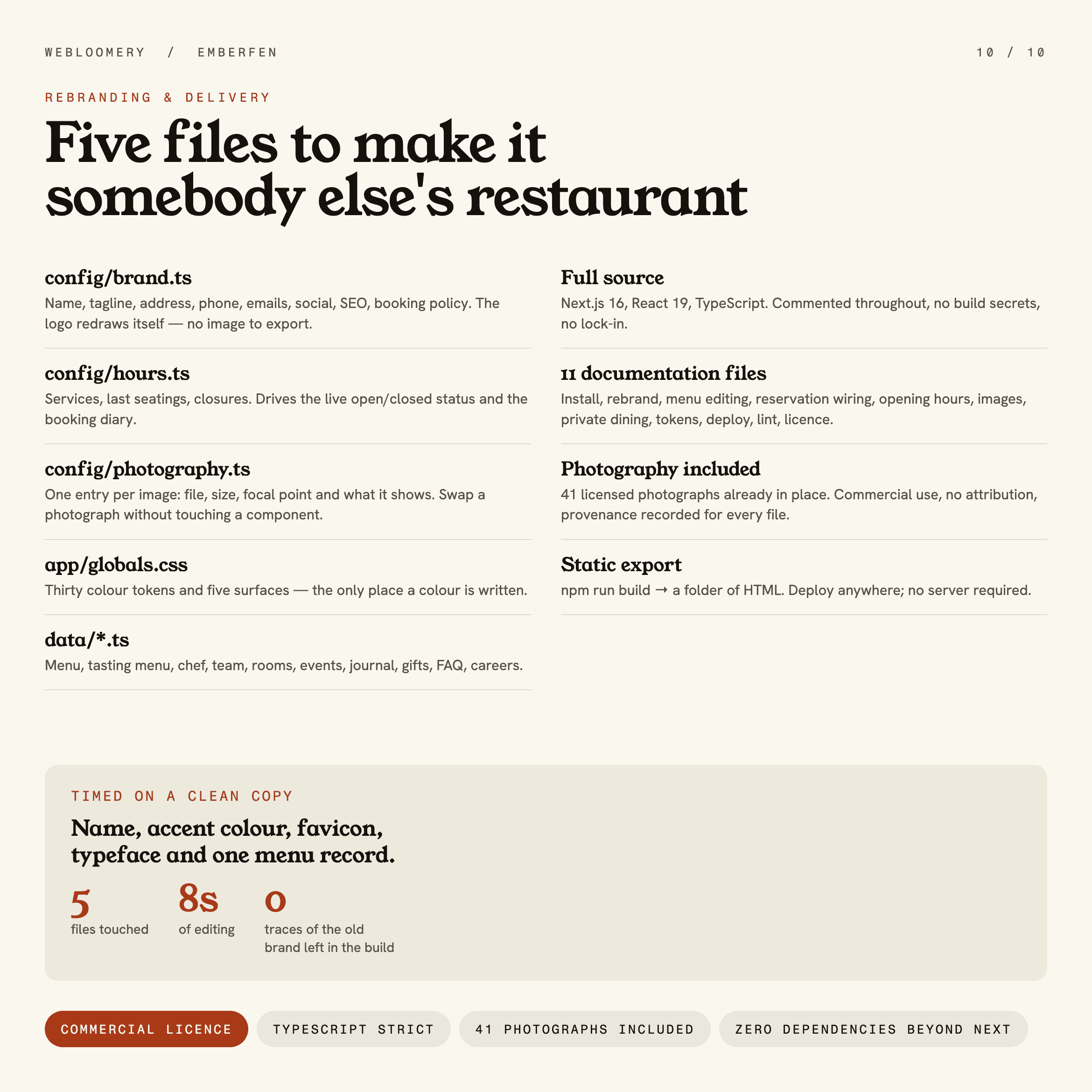
Forty-one licensed photographs ship inside the project: the dishes, the main room, the fire counter, the private rooms, the hearth, the cellar, the garden, the entrance and the team. Forty are from Pexels and one from Pixabay, stored locally rather than hotlinked, licensed for commercial use and adaptation, and requiring no attribution; provider, asset id, photographer and licence are recorded for every file. Swapping one for your own is a single entry in config/photography.ts, and the original SVG studies remain as the fallback for any slot without a photograph.
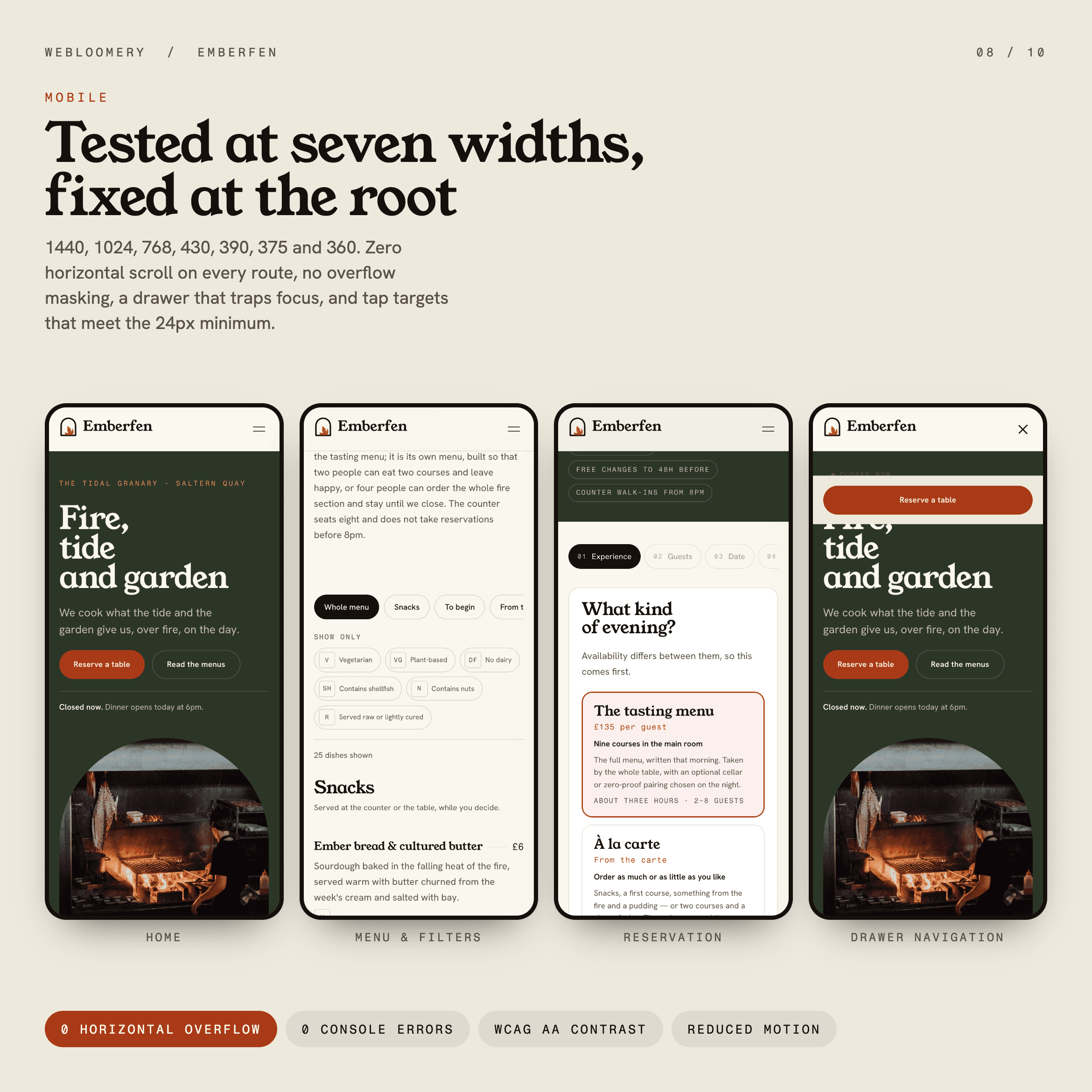
Verified in Chromium and WebKit at 1440, 1024, 768, 430, 390, 375 and 360 pixels and again at 200% browser zoom, with zero horizontal overflow and zero console errors on any route. WCAG 2.2 AA contrast on all five surfaces, a visible focus indicator on every keyboard-reachable control, and prefers-reduced-motion honoured.
Rebranding is centralised and measured, not promised: the name, accent colour, favicon, display typeface and a menu record were changed on a clean copy in five files and eight seconds, and the rebuilt site contained no occurrence of the old name or the old accent colour anywhere.
The reservation flow and the enquiry forms are front-end demonstrations and say so on screen; the documentation explains how to connect a real provider.
Designed as a credible product experience—not a set of disconnected sections. Every layout is ready to adapt while preserving the logic that makes it feel intentional.
Platform
Next.js
Version
1.2.0
Last update
September 19, 2026
QA status
passed
Inside the build
A complete working system.
Data-driven menu: one editable object per dish drives the menu pages, homepage highlights, filters and the per-dish story pages
Seven-step reservation flow with a working calendar, deterministic demo availability and full keyboard support
One opening-hours schedule drives the header status, the footer, the Visit page, the booking diary and the structured data, in the venue's own timezone
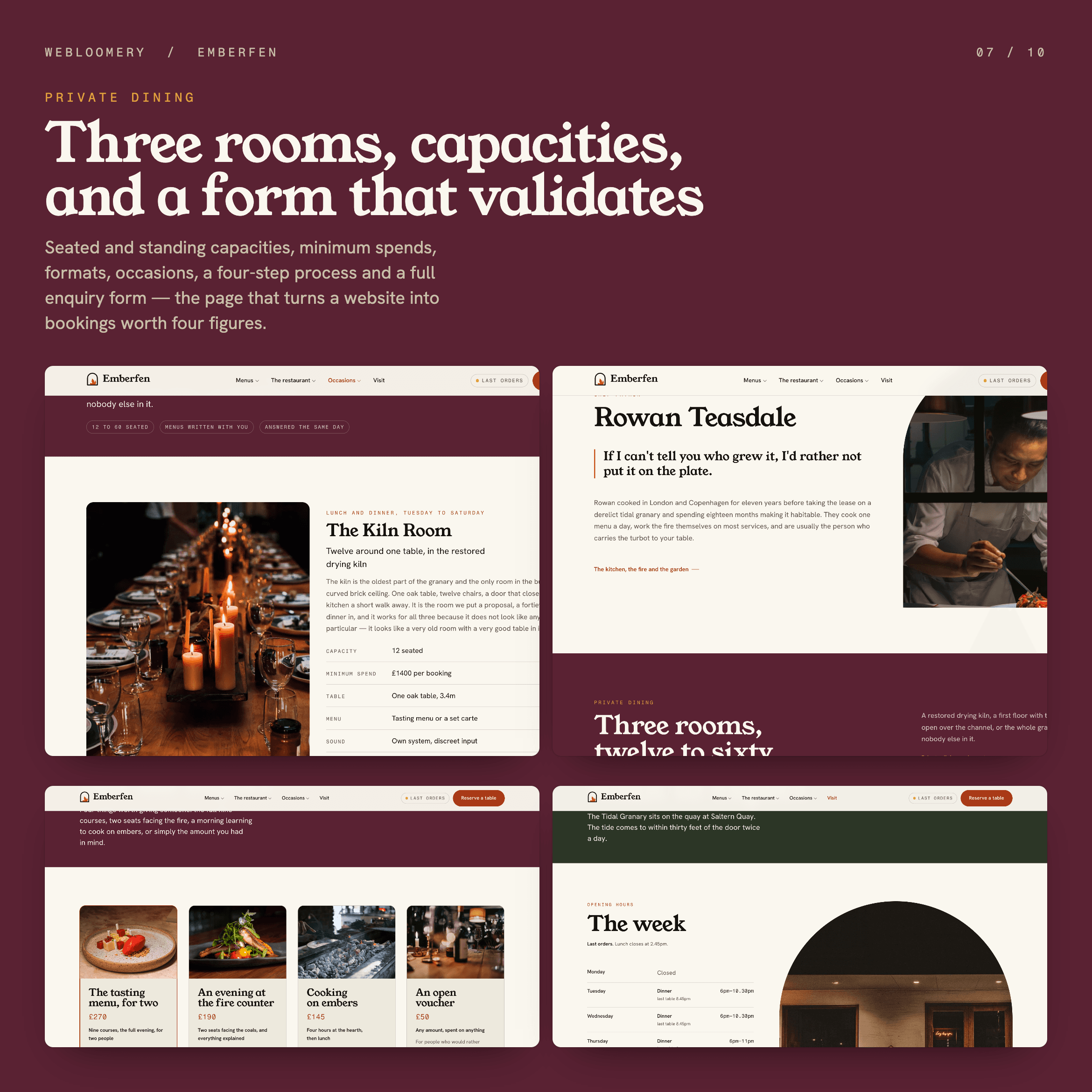
Private dining with three rooms, capacities, minimum spends and a validating enquiry form
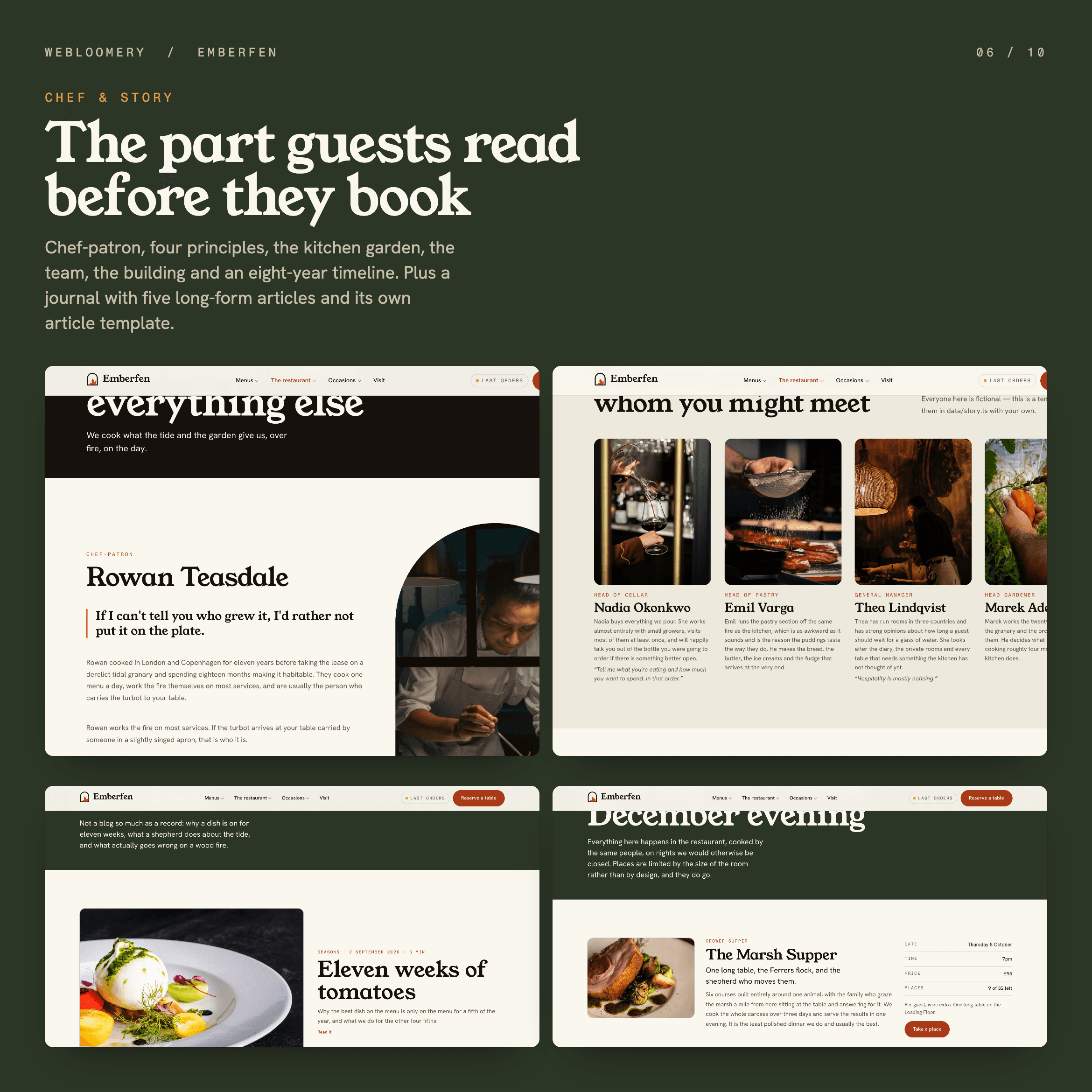
Editorial journal, gallery lightbox, gift experiences, events and careers
41 licensed photographs integrated, with provider, photographer and licence recorded for every file
Restaurant, FAQPage and Article structured data, sitemap, robots and Open Graph
Verified in Chromium and WebKit at seven widths plus 200% zoom, WCAG 2.2 AA contrast, reduced motion honoured
Rebrandable in five files: measured at eight seconds with zero traces of the old brand left behind
Pages included
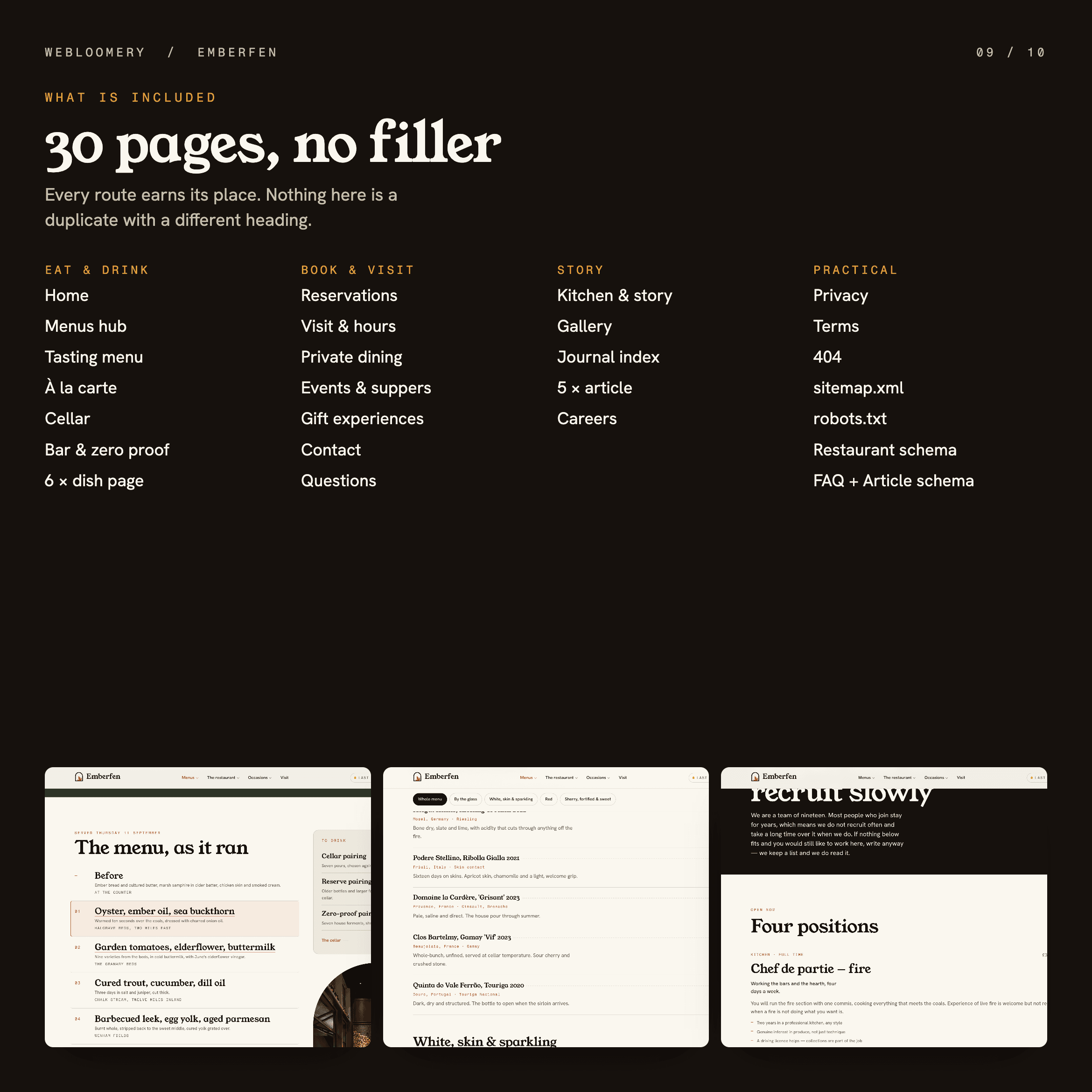
HomeMenus indexTasting menuA la carteBar menuCellar listDish detail (6 signature dishes)The kitchenPrivate diningGalleryJournal indexJournal article (5 pieces)VisitReserve a tableEventsGift experiencesCareersContactFAQPrivacyTerms
 Preview / 01